
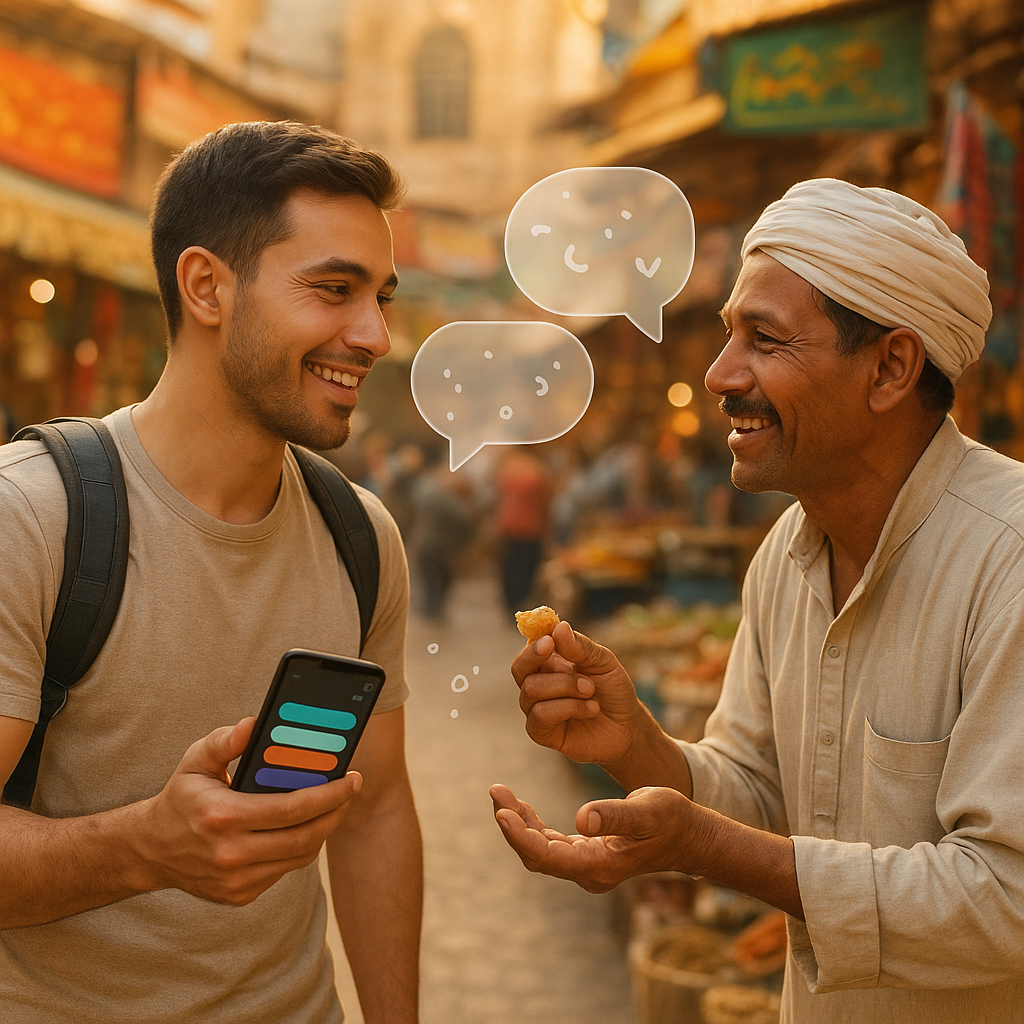
Picture this: you’ve just landed in a beautiful foreign city, your bags are packed with excitement, and you’re ready to explore. Then you step outside the airport and realize nobody around you speaks English — and your carefully rehearsed “hello” in the local language has completely slipped your mind. Language barriers are one of the most common anxieties travelers face, yet they’re also one of the most solvable. With the right tools, mindset, and preparation, communication across language gaps can actually become one of the more memorable parts of your journey.
Whether you’re navigating a bustling market in Morocco, ordering food at a tiny restaurant in rural Japan, or asking for directions in a small Portuguese village, there are smarter ways to bridge the gap. This guide breaks down practical, real-world strategies that seasoned travelers swear by — so you can spend less time feeling lost in translation and more time actually enjoying where you are.
Why Language Barriers Feel Bigger Than They Are
Before diving into solutions, it helps to reframe how you think about language barriers in the first place. Many first-time international travelers assume that not speaking the local language will make travel nearly impossible. In reality, human communication is remarkably adaptable. Researchers estimate that only about 7% of communication is based on the actual words we use — the rest comes from tone, body language, and context.
That said, a little preparation goes a long way. Showing up with zero effort to communicate in the local language can come across as dismissive or arrogant, especially in cultures where hospitality is deeply tied to reciprocal respect. On the flip side, even a few mispronounced words in someone’s native tongue typically earns a warm smile and a genuine effort to help. People appreciate the attempt.
Tech Tools That Actually Work in the Field
Technology has genuinely revolutionized how travelers handle language barriers. The options available today would have seemed like science fiction just a decade ago.
Translation Apps Worth Having on Your Phone
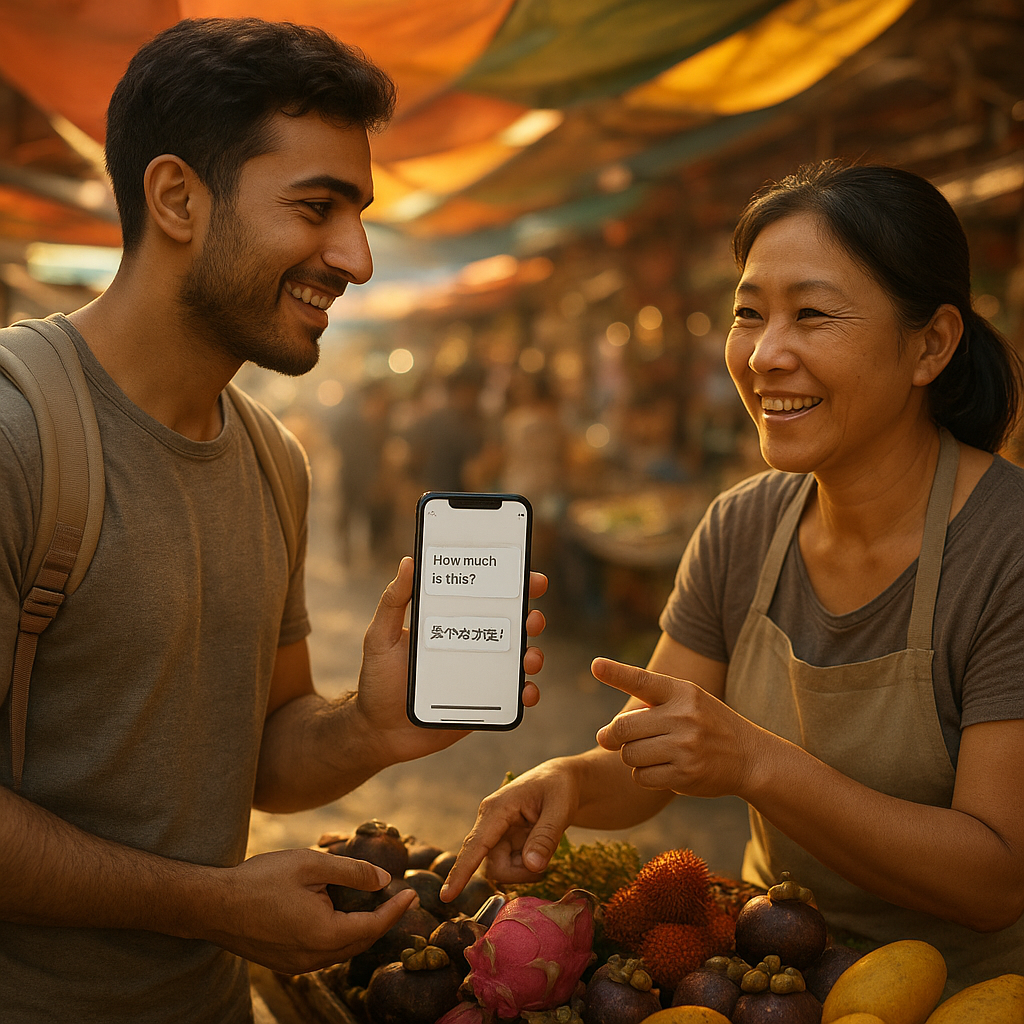
Google Translate remains the gold standard for most travelers. Its camera translation feature — where you point your phone at a sign, menu, or label and it instantly translates the text in real time — is especially useful in countries with non-Latin alphabets like Japanese, Arabic, or Thai. Importantly, you can download language packs for offline use, which matters enormously when you’re in areas with limited data access.
DeepL is another excellent option, particularly for European languages. Many linguists and professional translators consider it more nuanced than Google Translate for languages like German, French, and Spanish. For conversational phrases, it often produces more natural-sounding output.
iTranslate and Microsoft Translator are solid alternatives, and Microsoft Translator even supports multi-person conversations, where multiple people can speak into different phones and see translations in real time — genuinely useful when you’re deep in negotiation at a local shop.
What to Do With Your Phone When Traveling Internationally
A question that comes up constantly among travelers is what steps to take with their phone before heading abroad. Here’s what actually matters:
- Check if your phone is unlocked. An unlocked phone allows you to use a local SIM card, which is often the most affordable way to get data abroad.
- Contact your carrier before you leave. Many carriers offer international day passes or travel plans that activate data in foreign countries for a flat daily fee.
- Download offline maps and language packs. Before you board your flight, download Google Maps for your destination region and all the language packs you’ll need in your translation apps. Don’t assume you’ll have reliable WiFi everywhere.
- Consider an eSIM. Services like Airalo or Holafly let you purchase a digital SIM card before you travel, giving you data in your destination country without needing to swap physical cards.
- Enable airplane mode and use WiFi selectively if you want to avoid surprise roaming charges, especially if your plan doesn’t include international coverage.
Getting your phone situation sorted before departure means your translation tools will actually be available when you need them — not just when you’re near hotel WiFi.
Old-School Strategies That Still Deliver
Not everything needs a screen. Some of the most effective ways to handle language barriers are decidedly low-tech, and often more personal for it.
Learning Key Phrases Before You Go
You don’t need to become fluent. You need about 20 to 30 phrases to handle the majority of daily travel interactions. Think greetings, thank you, please, excuse me, where is the bathroom, how much does this cost, do you speak English, and I don’t understand. Apps like Duolingo or Pimsleur make it easy to pick up pronunciation basics in the weeks before your trip.
The psychological effect of this is significant. Locals in countries like France, Japan, and Italy frequently respond very differently to travelers who open with even a basic greeting in the local language compared to those who launch straight into English. It signals respect, and respect tends to open doors.
Carrying a Phrasebook or Printed Cards
Physical phrasebooks may feel dated, but they’re completely immune to dead batteries and poor cell reception. A small, country-specific phrasebook tucked into your bag has saved many travelers from frustrating situations. Some travelers go further and prepare laminated cards with essential phrases or dietary restrictions printed in the local language — particularly useful for people with food allergies who need to communicate specific needs clearly at restaurants.
Using Gestures and Visual Communication
Pointing, miming, drawing, and showing pictures are universally understood communication tools. Pull up a photo of what you’re looking for on your phone. Sketch a rough map in a notebook. Use the universal gesture for eating when you want a restaurant recommendation. These methods might feel silly in the moment, but they work remarkably well, and they tend to generate genuine human connection rather than frustration.
How to Survive in a Foreign Country Without Knowing the Language
The honest answer is: better than you’d expect, with a bit of strategy. Millions of travelers navigate countries every year with zero knowledge of the local language. Here’s what helps most:
- Stay in accommodation with helpful staff. Hotels, hostels, and guesthouses in tourist-frequented areas almost always have at least one English-speaking staff member who can assist with directions, recommendations, and local tips.
- Use visual menus and point-and-order systems. Many restaurants in Asia and parts of Europe use photo menus specifically because they serve international travelers. When in doubt, point at what someone nearby is eating — it works everywhere.
- Rely on internationally recognized symbols. Road signs, airport terminals, transit maps, and public spaces in most countries use internationally standardized icons. You don’t need to read a language to understand a sign for a restroom, exit, or train platform.
- Connect with other travelers. Fellow travelers — especially those who’ve been in your destination city for a few days longer — are often your best resource. Hostels, travel forums, and apps like Couchsurfing’s Hangouts feature connect you with people who can share on-the-ground knowledge.
- Hire a local guide for complex situations. If you’re navigating a particularly complicated day — visiting government offices, seeking medical care, or exploring truly off-the-beaten-path areas — hiring a local guide or interpreter for even a few hours is money very well spent.
Effective Ways to Overcome Language Barriers in Real Time
When you’re already in a situation where communication has broken down, a few tactics help you get back on track quickly.
Slow Down and Simplify
Speaking louder in English does not help anyone understand English better — yet it’s a reflex many travelers fall into. Instead, slow down, use simple vocabulary, avoid idioms, and speak in short sentences. “Where is the train station?” lands better than “Could you possibly point me in the direction of the nearest train station?” even when both parties technically share some English.
Write It Down
If verbal communication isn’t working, written communication sometimes does. Many people read a second language better than they can hear or speak it. Writing or typing out your question — or passing your phone with a typed message — can bridge a gap that spoken words can’t.

Find a Younger Local
This isn’t a universal rule, but English language education has expanded dramatically across most of the world over the last two decades. Younger locals in their teens and twenties are more likely to have English as a school subject and may feel more comfortable attempting to use it. University areas, cafés, and tech-forward spaces tend to be good spots to find a willing helper.
Use Translation Apps Bidirectionally
Don’t just use your translation app to translate things for yourself. Hand your phone to a local and let them type or speak in their language — then read the translation. This two-way approach makes communication far more dynamic and surprisingly effective for complex exchanges.
Building a Language-Ready Travel Kit
Preparing a simple “language kit” before any international trip reduces stress and improves your experience considerably. Consider assembling the following:
- Google Translate with offline language packs downloaded
- A secondary translation app (DeepL or iTranslate) as a backup
- A small phrasebook for your destination country
- A printed or laminated card with any dietary restrictions or medical needs in the local language
- Your accommodation address written in the local script (invaluable for taxi rides)
- Offline maps of your destination area
- A portable power bank to keep your phone charged throughout the day
None of these items are expensive or difficult to prepare, and together they cover the vast majority of communication challenges you’re likely to encounter.
The Mindset Shift That Changes Everything
Perhaps the most underrated strategy for handling language barriers is simply adjusting your expectations. Language barriers aren’t obstacles to travel — they’re part of it. Some of the most memorable travel stories involve the creative, funny, and surprisingly touching moments that happen when two people find a way to connect despite speaking completely different languages.
Approaching communication challenges with patience, humor, and genuine curiosity rather than frustration tends to produce much better outcomes. Locals almost universally respond positively to travelers who are making a sincere effort, even when that effort is imperfect. The willingness to try — to fumble through a phrase, to mime your way through an interaction, to laugh at yourself — is itself a form of respect that crosses every language barrier there is.
Final Thoughts
Navigating a foreign country without speaking the local language is genuinely manageable with the right tools and attitude. The key takeaways worth remembering: download offline translation apps and maps before you travel, sort out your phone’s international data situation in advance, learn at least a handful of key phrases in the local language, carry your accommodation address written in the local script, and approach every communication challenge with patience rather than panic. Technology makes much of this easier than it’s ever been, but the human elements — respect, curiosity, and a willingness to look a little silly in pursuit of genuine connection — matter just as much. Language barriers are rarely walls. More often, they’re doors waiting to be opened with a little creativity.